
Workflow comparison

Choose an arcads alternative for practical ad creation

An arcads alternative should make creative decisions easier, not add another layer of uncertainty. Use this guide to compare workflows, review boundaries, and move from a product brief to a clearer next step.

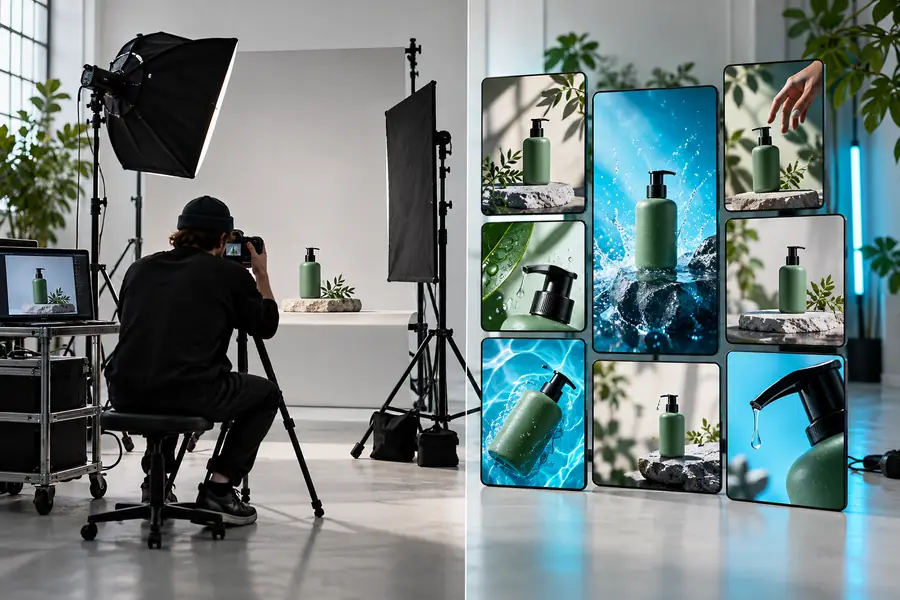
Creative team reviewing generated product advertising visuals

Start here

A better alternative begins with fit

The right choice depends on your brief, review process, and tolerance for manual editing. These related pages help you examine the comparison from different angles.

What to compare

Three mechanisms that make an alternative useful

A credible alternative is more than a different interface. Look for mechanisms that improve input quality, review clarity, and the handoff from idea to finished creative.

  1. 1

    Brief-to-concept translation

    Turn product details, audience context, and the intended action into a focused creative direction before generating or editing anything.

  2. 2

    Repeatable creative structure

    Keep the hook, proof point, product moment, and call to action visible so multiple concepts can be compared on the same terms.

  3. 3

    Review before release

    Create a deliberate checkpoint for claims, brand fit, pacing, and visual consistency instead of treating the first output as the final answer.

Use it in context

A step-by-step route from brief to review

Different teams need the same basic discipline in different forms. Each scenario below connects the alternative question to a practical comparison path.

Performance marketer

You have several product angles and need to decide which concept deserves a paid test.

Begin with one audience, one promise, and one measurable action; the arcads vs creatify comparison helps you structure a focused side-by-side review.

arcads vs creatify

Creative strategist

You want more variation without losing the product truth that makes the ad credible.

Write the non-negotiable proof points first, then use the arcads vs higgsfield comparison to clarify where experimentation should stop.

arcads vs higgsfield

Small brand team

You need a repeatable way to move from a rough idea to an approved social ad.

Separate concept selection from final polish, and use arcads ai as a starting point for understanding the workflow before choosing an alternative.

arcads ai

Review-led publisher

Your creative depends on credible reactions, demonstrations, or customer-facing evidence.

Build the script around the evidence you can support, then use arcads for reviews to examine how the review format affects the brief.

arcads for reviews

Site context

Limits and edges to check first

A comparison is easier when the surrounding context is explicit. These numbers describe the Arcads site plan, not guaranteed product performance or output volume.

Languages represented in the site manifest
6 locales
Pages represented in the current site plan
13 routes
Dedicated versus pages in this comparison family
2 comparisons
Unstructured advertising workflow with scattered creative decisions Open-ended brief
Structured advertising workflow with a clear comparison path Decision-ready brief
The difference is the review method, not a promise of identical output.

Make the next comparison concrete

If you are evaluating an arcads alternative, start with one real product, one audience, and one outcome. A focused brief gives you a fairer basis for judging creative direction, consistency, editing effort, and approval risk than a broad feature checklist.

Test your brief
  • Start with one product promise
  • Keep review criteria visible
  • Compare the workflow before the polish

FAQ

An arcads alternative is another route for planning, generating, editing, or reviewing advertising creative. The useful comparison is not only the feature list; it is how well the workflow fits your brief, team, and approval process.

Begin with the work you need to complete, such as concept exploration, product proof, variation, or final review. Then compare how each option handles inputs, creative consistency, editing, and the point where a person checks the result.

No single workflow is better for every team. A small brand may value clarity and repeatability, while an experienced creative group may prioritize control, experimentation, or a smoother handoff into existing production tools.

Use one representative brief rather than a generic demo. Check whether the resulting concepts preserve your product facts, support the intended audience, leave room for review, and require a reasonable amount of manual correction.

Yes, comparing more than one option can reveal whether a limitation belongs to the workflow or simply to one product. Keep the brief, success criteria, and review standard consistent so the comparison remains useful.

Start creating
Start creating